Thursday, 21 February 2008

E-DAY

FEBRUARY 27 & 28, 2008 STOP USING ANY UNNECESARY POWER JOIN THE E-DAY


"The small things in life can make a big difference"

Energy Saving Day (E-Day) is an editorially and financially independent and apolitical organisation which aims to make action to tackle climate change.

Their proposal is to make a 24 hrs maximum reduce power consumption in the UK,
between 6pm on Wednesday 27 February 2008 and 6pm on Thursday 28 February.

Everyone who wants to take part in E-Day is being asked to leave off household electrical items, which do not need to be on, and to leave these items off for as long as possible.

These might include lights in rooms that are not being used, televisions left on standby, mobile phone chargers left plugged in, unused printers, etc, etc.

During this experiment everyone in the country will be invited to see if they can save energy in their home, school or office, by leaving off electrical items which are not in use, and then offered direct feedback on the results of their actions on national electricity demand via the E-Day website (www.e-day.org.uk).

Climate change is a very serious reality, we can make the difference, each and every one of us count, let’s listen to the earth, let’s respect nature.


For more information, go to the E-DAY official website

-------
  • Druid Spirituality isn’t just about improving your own life — it’s about making a difference to the world too — it’s about becoming environmentally responsible. - Philip Carr-Gomm, chosen chief of OBOD
  • In our every deliberation, we must consider the impact of our decisions on the next seven generations.- Native American maxim
  • Today, we all see that man can destroy the foundations of his existence, his earth, hence, that we can no longer simply do what we like or what seems useful and promising at the time with this earth of ours, with the reality entrusted to us. On the contrary, we must respect the inner laws of creation, of this earth, we must learn these laws and obey these laws if we wish to survive. Consequently, this obedience to the voice of the earth, of being, is more important for our future happiness than the voices of the moment, the desires of the moment. In short, this is a first criterion to learn: that being itself, our earth, speaks to us and we must listen if we want to survive and to decipher this message of the earth. And if we must be obedient to the voice of the earth, this is even truer for the voice of human life. Not only must we care for the earth, we must respect the other, others: both the other as an individual person, as my neighbour, and others as communities who live in the world and have to live together. – Pope Benedict XVI
  • 'In lovely harmony the wood has put on its green mantle, and summer is on its throne, playing its string-music; the willow, whose harp hung silent when it was withered in winter, now gives forth its melody — Hush! Listen! The world is alive. - Thomas Evans


Tuesday, 5 February 2008

Athair ar Neamh

Today, I was meditating and praying a lot of time. One of my favourites is this song/prayer, that address to the One God, in the beutiful language of the Emerald Island, Gaelic. In the beutiful voice of Eithne Ni Brahonain.

Athair ar Neamh, Dia linn / Father in Heaven, God Bless us


Athair ar Neamh. Dia linn
Athair ar Neamh. Dia liom
m'anam, mo chroí, mo ghlóir
moladh duit, a Dhia.

Fada an la, go sámh
Fada an oíche', gan ghruaim,
aoibhneas, áthas, grá,
moladh duit, a Dhia.

Móraim thú, ó lá go lá,
Móraim thú, ó oích' go hoích'

Athair ar Neamh. Dia linn,
Athair ar Neamh. Dia liom,
an ghealach, an ghrian, an ghaoth,
moladh duit, a Dhia.

-----
Father in Heaven, God bless us
Father in Heaven, God bless me
my soul, my heart, my glory
praise be to you, oh God.

Long is the peaceful day
Long is the night without gloom,
wonder, joy, love,
praise be to you, oh God.

I praise you from day to day
I praise you night after night

Father in Heaven, God bless us
Father in Heaven, God bless me
the moon, the sun, the wind,
praise be to you, oh God.

Sunday, 3 February 2008

Happy Imbolc

Imbolc or Oimelc is the Celtic celebration of the beginning of the spring. This date the celebration is done in honour of Brighid.

Brighid is considered a triple goddess for the Celtic Lore, patron of poets, crafts and health. On this day it’s celebrated as the Mother, the light bringer, the fertile earth.

This day has special resonance for another traditions along with the Celtic one: In Rome, today was the festival of Juno-Februa the goddess of marriage, mother of Mars. Rome was lighten with candles and a procession was made on her honour. In Mexico was the beginning of the Aztec year, that was also a big celebration with fires. The Catholic Church commemorates the Candlemas day, that remember of Jesus presentation to the temple, where he means a light to the world.

I went to the Long Man of Wilmington to commemorate the day. It was a very nice experience shared with some members of the Anderida Gorsedd.

I'm beginning to feel the spring around, some crows made a nest in the tree infront of my window, also I noticed this last weeks, that the sunset is about one hour later than before, let's wellcome the Spring.

May the coming spring be full of blessings for all.

Monday, 28 January 2008

Four elements vs Three realms

The term “elements” has some different meaning according to the frame of reference we are talking about.

In science, when we refer to elements, we refer to the atomic chart of elements that conform the human known universe. From Hydrogen to Ununseptium, the 117 elements are for use in chemistry and physics.

As for realms, science considers to be five main living realms animalia (animals or metazoans), plantae (vegetables), fungi (superior fungus), protista (protozoan, eukaryotic alga & inferior fungus) and monera (bacteria and prokaryote alga).

These definitions are in constant change, with the new discovers that science make everyday.

I said that to avoid any confusion for the topic I’m going to talk about. As many spiritual definitions, we are not talking about science words, but metaphors.

In western tradition is very common to refer to the four elements for everything is created, or related, four main forces that conform the spirit of the things.
This concept came from pre-platonic Greeks, the elements, as you probably know are:

Γαια, gaia earth
ύδωρ, hydor, water
άήρ, aer, air
έιλή, heile, heat (fire)


They represent in Greek philosophy, science, and medicine the realms of the cosmos wherein all things exist and whereof all things consist.

Pythagoras added a fifth element, Aether αιθήρ, also called quintessence (from the Latin quinta essentia, "fifth element") representing the space above the earth, but also representing the spirit, soul and ideas. A non-matter element.

There’s a beautiful song by Cielo y Tierra, a Mexican quartet that says “Tierra mi cuerpo, agua mi sangre, aire mi aliento y fuego mi espíritu” (earth my body, water my blood, air my breath and fire my spirit).

This concept is also found in one of the most ancient pagan religions, Hinduism.

Prithvi / Bhumi — Earth
Ap / Jala — Water
Vayu / Pavan — Air / Wind
Agni / Tejas — Fire
Akasha — Aether

How ever, this concept is far of being a universal one, as an example, Chinese tradition speaks of five “earthly” elements: metal, wood, water, fire, earth.
Some has used the scientific idea of the four states of matter, to validate the greek concept (solid, liquid, gas and plasma) but is an inaccurate one, since plasma is not fire as we know fire, moreover fire (or heat) is used to change a matter from one state to another (and not all matter can be changed from state, for example, living things, I mean the Carbon based life, can’t pass to gas or plasma state, since carbon is reduced to ashes.

That leads me to the Celtic point of view about the cosmos and how is it form.

As state shortly in a post below, three was a sacred number to the celts. They see even numbers as unbalanced ones, there’s a need of something between that bring balance to that; so was with elements.

This elements were called Talam (earth) , Muir (sea) and Nem (sky). This elements are not total abstractions, we can see them surrounding us, we can feel them as we walk in our lifes. Celtic rituals don’t invoke these elements, nor dismiss them, since they’re always present in our lives. “Invoking” the elements makes no sense, since they are within us and around us.


How ever, the spiritual meaning for each is not only their physical description. It’s important to take into account that the meanings are not to be associated with the dualistic paradigm. They are not Good/Bad, Female/Male, Light/Dark elements, we can encounter these attributes within them, but not limited to. As told before, the dualistic approach of the western culture, including the mainstream monotheist religions and most of the pagan ones, is not applicable to the celtic point of view.

Talam, is the land, and the centre, where we walk, where we live, it’s the midworld. It means solidity, and stability. We can manifest it as a rock, or a tree. It’s our body.
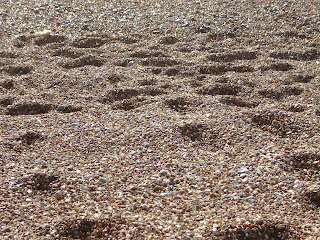


Muir, is the ocean, the water that sorround us far or close, it’s emotionally and spirit oriented, transformative, chaotic, liminal, it’s our sensorial and intuitive being. We can manifest it as a water, from a river, from a well, from the sea. Well are often used as passages to the Underworld, were we can encounter our ancestors, It’s our blood.


Nem is the sky, it’s mind and wisdom oriented, illuminating, ecstatic, is the source of life and consciousness, a life force. Ancient Celts believe that the soul was in our heats, as part of our mind. It’s manifest in the world as the sky, and if we travel beyond we can encounter with the stars. It’s our breath.


There’s also a denomination for these in welsh celtic tradition, as Calas, Gwyar & Nwyfre

That is applicable to all human experiences, and inter-relations, I read an example that makes it clear.

Let’s take our food, the Talam are the elements of the dinner: meat, vegetables, grains, etc. Muir is the cooking process, the transformation, the flow from raw to cook. Finally, Nem is the mental dimension, how we select the ingredients, the recipes, the skills and personal seasoning of the cook. This is a easier example, but you can think in several more.
Irish has a name for the colour of the three realms, Glas, this word means green/grey/blue, colours associated with the Other World, the Tir nan nÓg. Green for the earth, grey for the sea, blue for the sky. Meaning a state where the three realms join and pure wisdom and illumination is reached.

Returning to the initial thought, about the states of matter, solid, liquid and gas could be far easy associated to the realms, and plasma could be interpret as a travel beyond the sky, when we reach the stars… an Aislingthe (let’s remember that plasma is a very new concept, not known by the Celts, or even by our fathers when they went to school)

Meditations about these realms are far and beyond the uses of this blog, but I hope to get the spirit and explanation of why a Celtic ritual and worship, shouldn’t include the four greek elements.


. . . muir mas, nem nglas, talam cé . . .

`the beautiful sea, the blue heaven, the present earth . . .'

Wednesday, 23 January 2008

Earth Pilgrim

Thanks to Liz from OBOD message board, I was able to see this magnificent and inspirational video.

In this unique BBC 2 Natural World documentary Resurgence Editor Satish Kumar reflects on our connection to our natural environment. Using the traditional English landscape of Dartmoor as his natural muse he offers a very Indian perspective through the changing seasons.

It's very interesting that cultures so separated by distance as the Hindu and the Druids, had so much in common, so much that happen to be lost by our western industrializated and postmodern world.

This Indian wise man, share his point of view of the nature in the frame of the Celtic land of Dartmoor, recognising the Druid point of view about nature, and giving his own.


Who visits me

Locations of visitors to this page
eXTReMe Tracker